
Why Margin Is Not Your FX Risk Budget
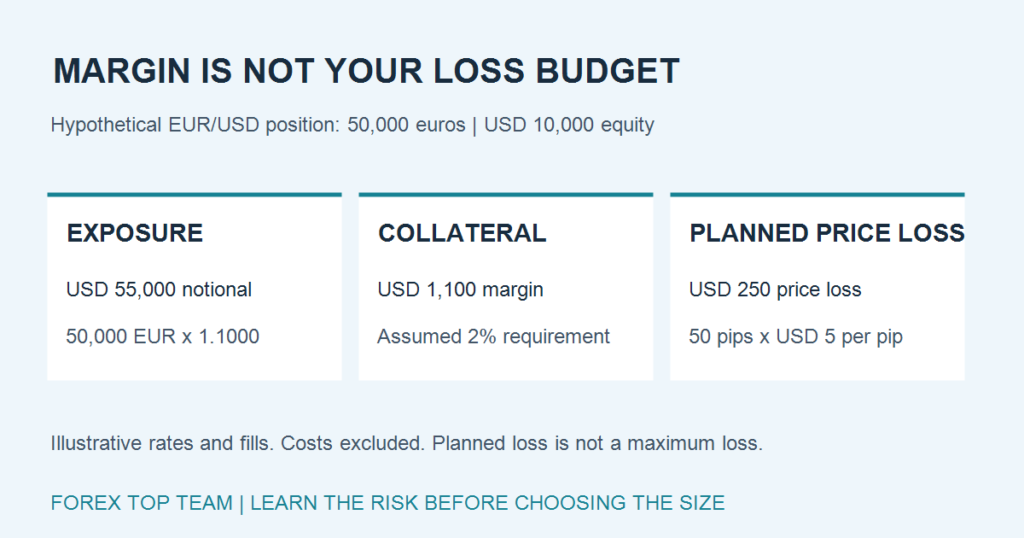
Learn to separate FX notional exposure, required margin and planned cash loss, with a clear EUR/USD example and an account-level risk checklist.
What Rising Treasury Yields Really Tell FX Traders
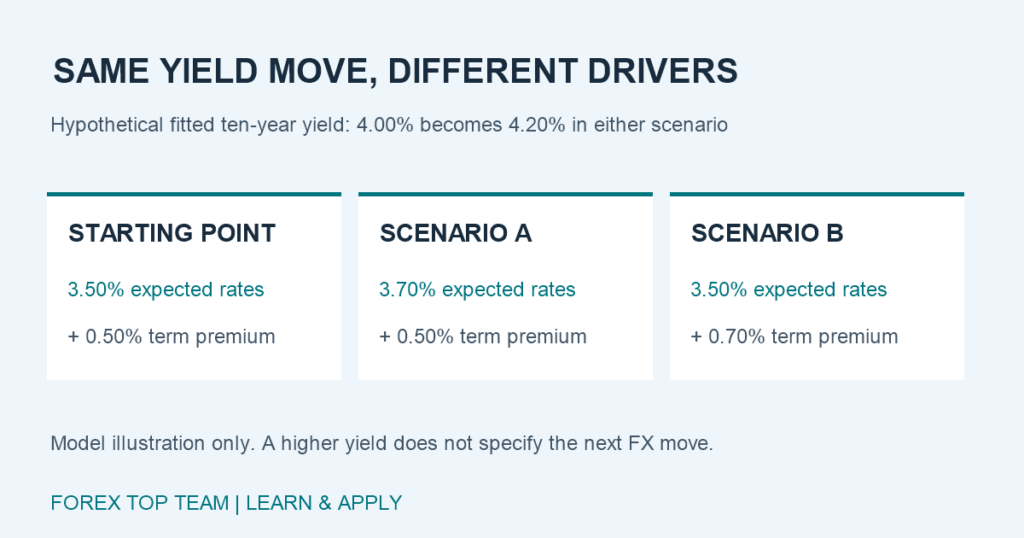
Learn to separate rate expectations, term premium and inflation compensation before interpreting rising Treasury yields as a signal for the US dollar.
Why a High FX Win Rate Can Still Lose Money
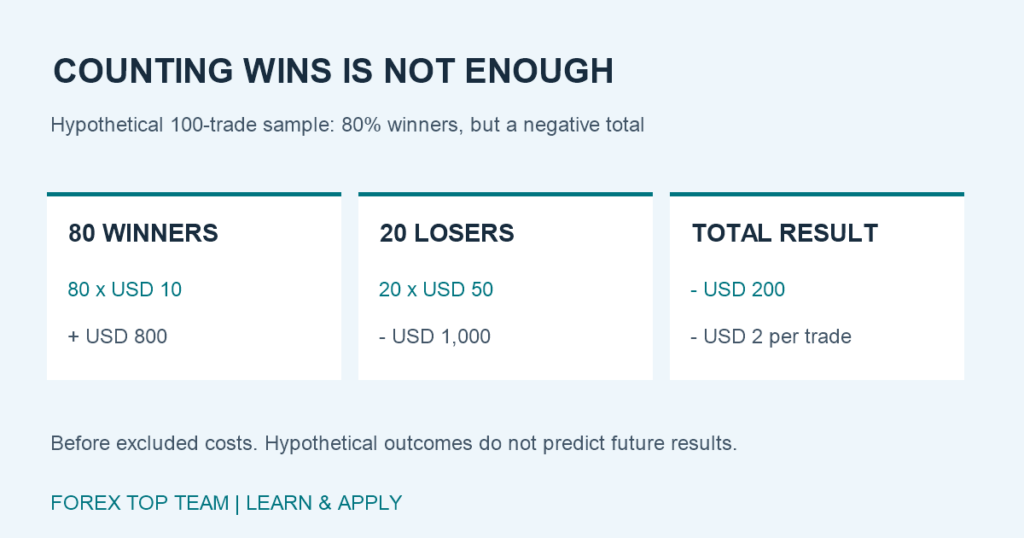
Learn why an 80% FX win rate can still produce losses, how average payoffs and costs change break-even arithmetic, and what to check in your trading record.
Why Your FX Buy Limit Did Not Fill

Understand why a chart touch may not fill your FX buy limit, and learn to check bid-ask quotes, order status and missed trades before changing your entry rules.
Why Your FX Call Can Lose When the Pair Rises

Learn why a favorable currency move can still leave a long FX call losing money, with a simple example of delta, time decay and volatility repricing.
Why EUR/JPY Can Ignore a Rising EUR/USD

Learn how EUR/USD and USD/JPY combine into EUR/JPY, why percentage moves can offset, and how quote direction, bid-ask prices and timestamps change the interpretation.
Why Falling Inflation Can Still Mean Rising Prices
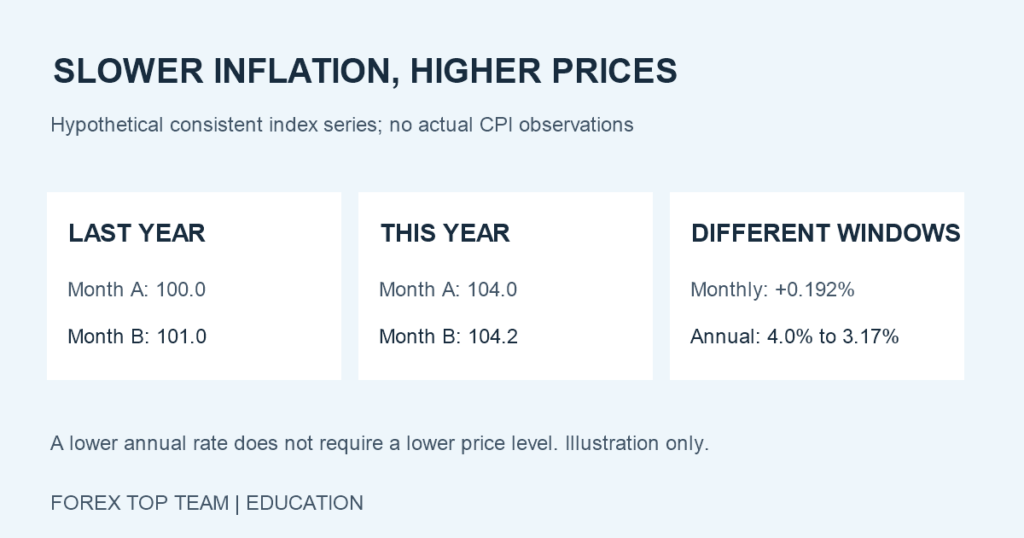
Understand why annual inflation can fall while prices rise, how base effects and seasonal adjustment work, and how to read CPI before forming an FX interpretation.
Can a Weekend Gap Bypass Your FX Stop?
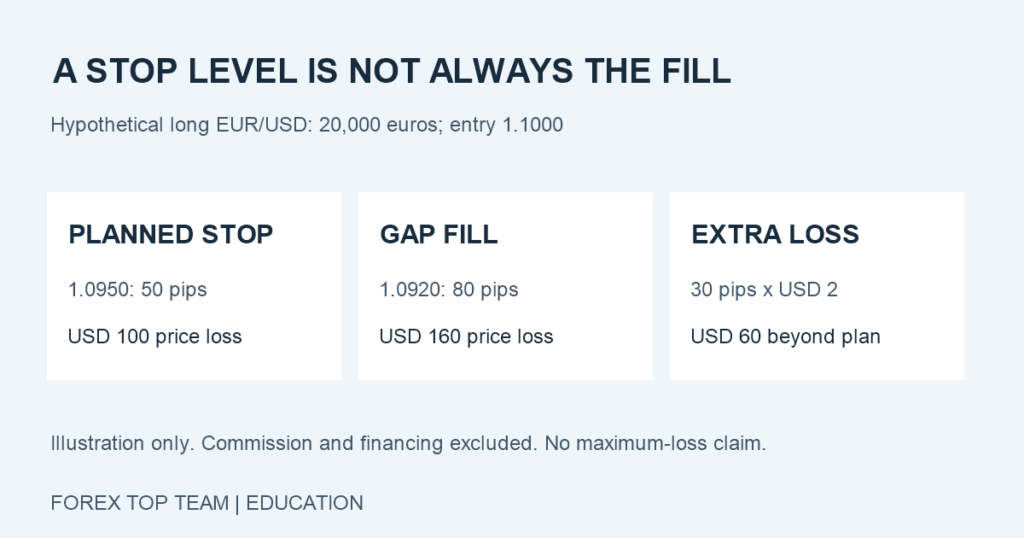
Understand how weekend gaps can change stop-loss execution, and use a simple EUR/USD example to stress-test position size, costs and account exposure.
Why a Strong Dollar Index May Not Lift USD/JPY
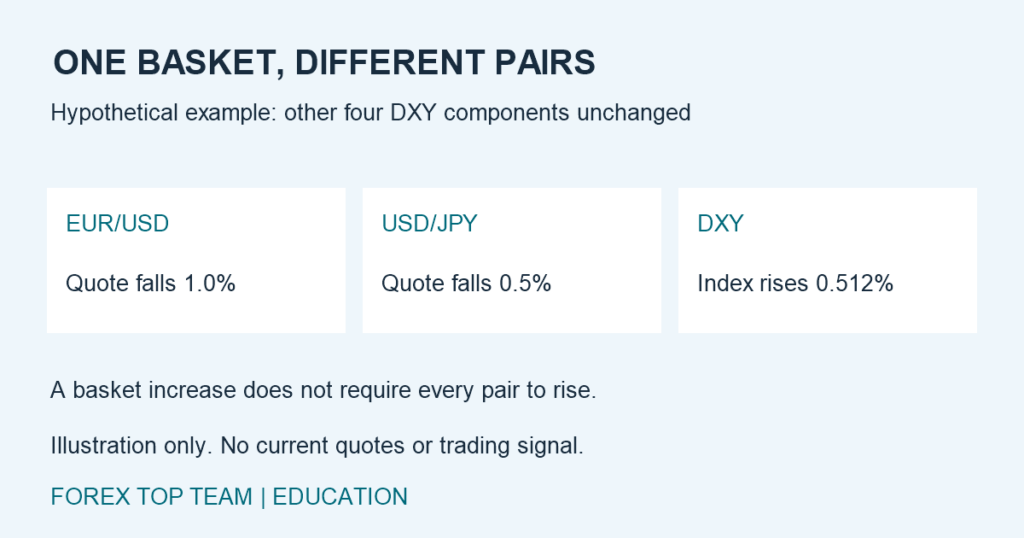
Learn how the dollar index basket can rise while USD/JPY falls, with a clear hypothetical calculation and a practical checklist for comparing currency charts.
FX Implied Moves Are Not Price Targets

Understand how annualized option volatility becomes a rough FX movement scale, and why that scale is neither a price target nor a guaranteed trading range.