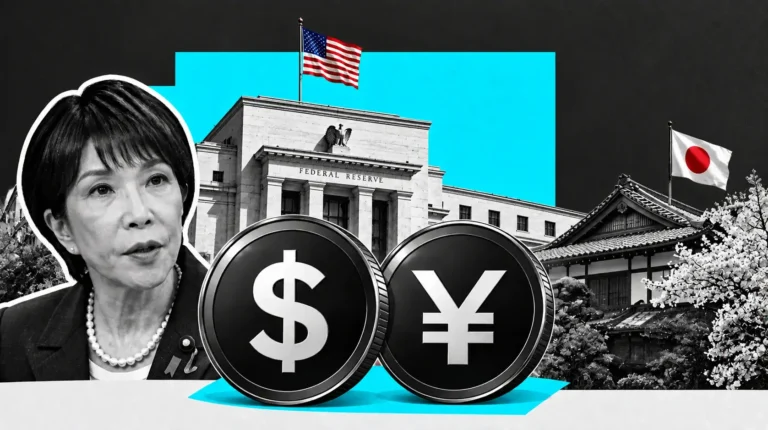
【+197,641 USD】USD/JPY Heading Toward 165? A Market-Moving Week Ahead With the FOMC and BOJ Meetings
Trading Period: July 20–24, 2026
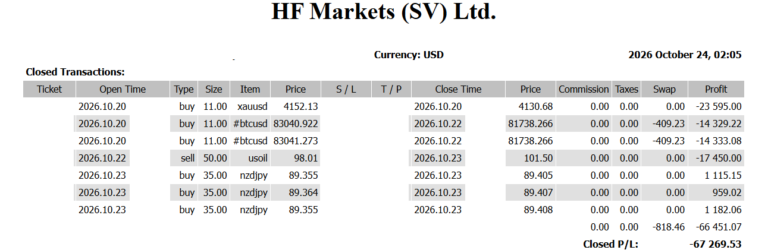
Weekly Total: +197,641 USD
■ Weekly Review
This week’s key takeaway was extremely clear.
We successfully captured the strong upward trend in GOLD and significantly increased profits.
Meanwhile, the U.S. dollar remained near elevated levels but lacked clear direction. USD/CHF and USD/CAD also continued to trade within relatively narrow ranges.
Rather than forcing trades in directionless dollar pairs, we concentrated capital on GOLD, where a clear trend had developed.
The result was a weekly total of +197,641 USD.
The basic strategy of trading only the markets that were actually moving proved highly effective once again.
■ Key Market Characteristics This Week
The market structure can be summarized as follows:
・GOLD: Maintained a strong uptrend despite several pullbacks
・U.S. Dollar: Held near elevated levels but lacked clear direction
・USD/CHF: Remained trapped in a directionless range
・USD/CAD: Experienced volatile two-way movement amid higher oil prices and trade-related concerns
・USD/JPY: Climbed into the upper 163 area amid Middle East tensions and rising crude oil prices
Overall, GOLD was unquestionably the dominant market of the week.
There is no need to pursue profits in every market.
This week once again demonstrated the importance of distinguishing between instruments with clear trends and those lacking direction, then concentrating on the markets offering the highest-probability opportunities.
■ Strategy Going Forward
・Continue monitoring GOLD for buy-on-dip opportunities
・Enter dollar pairs only after a clearer direction has developed
・Avoid forcing positions in range-bound markets
・Remain alert to sudden changes in Middle East tensions and crude oil prices
・Concentrate capital on markets displaying the clearest trends
Our priority will remain selecting the market with the strongest underlying theme rather than simply increasing the number of instruments traded.
FX Strategy Update
July 27–31, 2026 | Market Outlook
Previous Week’s Performance: +197,641 USD
■ Key Market Theme for Next Week
The central question for next week is:
“Will USD/JPY move toward 165, or will the FOMC and BOJ meetings trigger a reversal?”
USD/JPY rose as high as 163.99 amid escalating Middle East tensions, safe-haven demand for the U.S. dollar, and worsening Japanese terms of trade caused by higher crude oil prices.
With the pair approaching 164, the 165 level is now being viewed as the next major target.
However, both the Federal Open Market Committee and the Bank of Japan policy meeting will take place next week.
Both central banks are broadly expected to leave policy rates unchanged.
The key issue, however, is not whether rates change at these meetings.
The real focus will be the timing and pace of future rate increases.
If Federal Reserve Chair Warsh warns that higher crude oil prices could reignite inflation and signals the possibility of a September rate hike, U.S. yields and the dollar could rise again.
Conversely, if BOJ Governor Ueda emphasizes the risks posed by yen weakness and higher import prices and signals support for an additional rate increase in September or October, the yen could strengthen rapidly.
A move of several yen in USD/JPY would not be surprising if either central bank delivers an unexpected message.
■ USD/JPY Strategy
USD/JPY is expected to remain relatively well supported overall.
The main forces weighing on the yen remain largely intact:
・The U.S.–Japan interest-rate differential
・Yen-funded carry trades
・Safe-haven demand for the U.S. dollar
・The deterioration in Japan’s terms of trade
If the FOMC delivers a hawkish message, USD/JPY could break above 164 and test 165.
However, intervention concerns are likely to intensify sharply in the upper 164 area and around 165.
Rather than chasing the market at elevated levels, it would be more rational to look carefully for buying opportunities following a sharp pullback.
On the other hand, if the BOJ signals that it may accelerate the pace of rate increases, the unwinding of short-yen positions could trigger a sudden decline.
The strategy for next week is therefore not to commit to a predetermined direction, but to assess the market’s reaction after the FOMC and BOJ meetings.
■ GOLD Strategy
GOLD will remain our highest-priority market.
Escalating Middle East tensions, higher crude oil prices, concerns over renewed inflation, and uncertainty surrounding central bank policy all provide fundamental support for gold.
However, the strong rise over the previous week has also created some short-term overheating.
Rather than chasing higher prices, the focus will remain on pullbacks followed by clear confirmation of renewed buying.
If the FOMC delivers a strongly hawkish message and U.S. yields and the dollar rise sharply, GOLD could face temporary selling pressure.
The key will be determining whether such a decline represents a genuine trend reversal or merely a correction within the broader uptrend.
As long as the upward trend remains intact, the core strategy will continue to be buying on pullbacks.
■ EUR/USD Strategy
EUR/USD is expected to remain under pressure.
The ECB left policy rates unchanged and maintained a cautious stance regarding future policy.
Although some policymakers have argued that further rate increases should be considered, Europe continues to face downside risks to growth from higher energy prices.
Eurozone GDP and inflation data will be released next week.
Stronger inflation could support the euro, but evidence of weaker growth would likely place additional pressure on the currency.
If the FOMC takes a hawkish position, selling EUR/USD on rallies will remain the preferred strategy.
■ GBP Strategy
The main focus for sterling will be the Bank of England meeting and the fiscal policy of the new government.
Policy rates are widely expected to remain unchanged.
However, if more Monetary Policy Committee members support a rate increase, sterling could strengthen.
On the other hand, concerns surrounding increased government spending and greater flexibility in fiscal rules under the Burnham administration could weigh on both UK government bonds and the pound.
GBP/JPY may continue to receive support from the strength of USD/JPY, but the pair is already trading near historically elevated levels.
We will avoid chasing higher prices and wait for a clearer direction after the Bank of England meeting.
■ CAD Strategy
The Canadian dollar will remain caught between U.S.–Canada tariff negotiations and higher crude oil prices.
Rising oil prices are normally supportive for the currency of a major oil-producing nation.
However, the U.S. plan to impose additional tariffs on Canadian products represents a significant negative factor.
If tariff negotiations deteriorate, the Canadian dollar may struggle to benefit even if crude oil prices continue to rise.
Until a clearer directional trend develops, we will avoid forcing positions.
■ AUD Strategy
Australian CPI will be the main focus for the Australian dollar.
Employment data has remained solid, while concerns over services inflation and wage growth continue.
If CPI exceeds expectations, speculation regarding an additional Reserve Bank of Australia rate increase could strengthen and support the Australian dollar.
However, if Middle East tensions worsen or global equities fall sharply, the risk-sensitive Australian dollar could come under selling pressure.
The broader global risk environment will therefore be just as important as the domestic economic data.
■ Core Strategy for the Week
Next week will be driven simultaneously by U.S. and Japanese monetary policy and geopolitical risks.
Price movements are likely to be larger than usual, with sharp swings in both directions immediately following major announcements.
The core strategy is as follows:
・Avoid holding large positions ahead of the FOMC and BOJ meetings
・Do not chase the initial move immediately after the announcements
・Remain alert to intervention risk near 165 in USD/JPY
・Continue monitoring GOLD primarily for buy-on-dip opportunities
・Avoid forcing trades in dollar pairs that lack direction
・Concentrate on the clear trends that develop after the policy announcements
The more important events a week contains, the less useful it becomes to try to predict every outcome in advance.
The priority will be to assess the announcements, observe the market’s reaction, and then follow the trend that emerges afterward.
■ Final Scenario
Next week, we must prepare for both:
“USD/JPY rising toward 165”
and
“A sharp reversal caused by a more hawkish BOJ or heightened intervention concerns.”
If the FOMC is hawkish and the BOJ maintains a cautious position, USD/JPY could continue toward 165.
Conversely, if the Federal Reserve signals that it is in no hurry to raise rates and the BOJ becomes more open to further tightening, USD/JPY could fall sharply.
If both central banks adopt hawkish positions, the market will be determined by the difference in policy speed—which central bank is expected to raise rates sooner and more aggressively.
The core principle for next week is:
“Do not trade the prediction. Trade the trend that develops after the policy announcements.”
Because this may be one of the most volatile weeks in the market, we will avoid deciding the direction in advance and concentrate capital only on markets where a clear trend has emerged.
■ Closing Thoughts: Traditional Wisdom Often Exists for a Reason
As children, many of us were taught simple home remedies:
Drink ginger tea when you catch a cold.
Take honey when your throat hurts.
These forms of traditional wisdom were once viewed as little more than experience passed down through generations.
In recent years, however, scientific research has gradually begun to clarify why some of these remedies may be beneficial.
For example:
Turmeric may help reduce inflammation.
Ginger may help ease nausea and inflammation.
Lavender may help reduce stress and anxiety.
Peppermint may help relieve digestive discomfort.
Of course, none of these remedies should be viewed as a complete cure for illness.
However, as small daily habits that help support the body, many of them are more rational than they may initially appear.
Trading is very similar.
The most important practices often seem ordinary:
Daily market analysis.
Risk management.
Maintaining a trading journal.
Following stop-loss rules.
These habits do not immediately produce spectacular profits.
That is why they are often underestimated.
However, traders who remain successful over long periods rarely rely on flashy shortcuts.
Instead, they consistently follow the same basic principles that have always mattered.
In both health and trading, the most important thing is not finding a shortcut.
It is building good habits that can be maintained over time.
Those small habits may eventually create a far greater difference than expected several years later.
Next week, let us continue to respect the fundamentals, remain patient, and build our assets steadily, one step at a time.