In the remarks of FRB Chairman Powell yesterday, the dollar began to rise again.

In the overseas market yesterday, the dollar-yen pair hit a high of just around 137 yen. Along with renewing the year-to-date highs, the dollar has strengthened and the yen has weakened since September 1998. At the ECB Forum, FRB Chairman Powell said, “The US economy is in a position to cope with monetary tightening,” reminding us of further acceleration of interest rate hikes, which led to a stronger dollar. There was a strong message that he wanted to curb inflation at all costs, even though he was wary of a rate hike that would cool the economy.

For the dollar-yen exchange rate, the contrast between the Bank of Japan, which does not change its stance of continuing easing, and the US financial authorities, which show a positive stance of raising interest rates, is even more striking. In the Tokyo market yesterday, former BOJ director Yamaoka said, “If inflation expectations and the outlook for the depreciation of the yen continue to rise, it may be necessary to adjust the upper limit of long-term bond yields.” However, it was immediately pushed back toward the depreciation of the yen. He also said, “The Bank of Japan will not adjust the yield cap next month and may do so within a year,” and thought that there would be no policy changes in the market until after Kuroda retired. It seems.

Today, a series of US economic indicators will be announced. US New Unemployment Insurance Applications (Weeks up to 25th), US Personal Income (May), US Personal Expenditure (May), US PCE Deflator (May), US PCE Core Deflator (May), US Chicago Purchasing Division Association Economic Index (June), etc. The PCE deflator, which is known to be emphasized by the US financial authorities as a price index, is expected to increase by 6.4% from the previous year in most markets. Growth is expected to accelerate further from + 6.3% in April last time. On the other hand, as for business sentiment, the Chicago Purchasing Department Association Economic Index is also drawing attention. 58.0 is expected to be the majority of the market, down from 60.3 in May last time. In line with what Chair Powell said yesterday, we are more wary of rising inflation.

Today, it is assumed that unstable price movements are likely to occur even after the end of the month rebalancing.

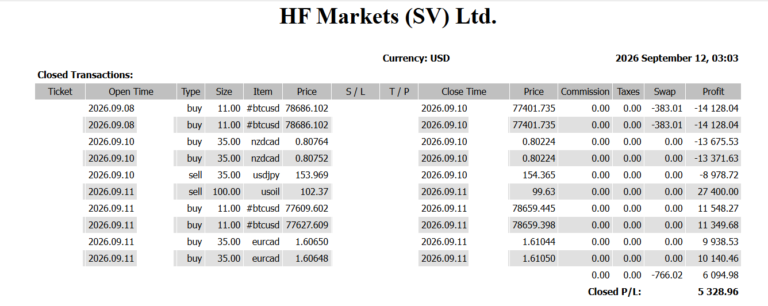
I went to buy yesterday thinking that USDJPY would jump above 137.00, but I was pushed by selling and lost.
It seems that it is difficult to make a straightforward flow like the previous week.

More Insights

🗞️ Middle East Conflict Stalemate — Markets Lose Direction / U.S. Jobs Report Tonight 🌍 Market Theme “War × Inflation × Uncertainty” Tensions in the Middle East remain high. Both sides — the United States and Israel on one side and Iran on the other — continue to signal their willingness to prolong the conflict, with no clear signs of resolution. The situation has effectively entered a phase of strategic stalemate, where each side is testing the other’s endurance. 🛢 Oil as the Key Barometer To gauge the market impact of the Middle East crisis, crude oil futures have become the most important indicator. Key concerns include: Risks surrounding the Strait of Hormuz Potential disruptions to global oil supply Rising inflationary pressure However: The panic selling in equities has somewhat eased The FX market currently lacks strong directional momentum 💱 FX Market Basic structure Geopolitical crisis → USD buying But at the moment: Position adjustments Headline-driven reactions Interest rate expectations are all interacting. As a result, the market is trading in a nervous range-bound environment, with no decisive catalyst for a sustained USD rally. 🇺🇸 Trump Administration Developments Policies from President Donald Trump are also attracting market attention. Higher oil prices could lead to: Stronger inflation pressure Rising political dissatisfaction ahead of midterm elections According to reports, the administration is considering measures such as: Restrictions on Russian oil exports Intervention in oil futures markets 👉 These steps may indicate efforts to find an exit path from the conflict. Meanwhile, reports suggest that Iran may also be experiencing depletion of missiles and weapon systems. 📊 Tonight’s Major Event 🇺🇸 U.S. Employment Report (Nonfarm Payrolls) Market expectations: Indicator Forecast Previous Nonfarm Payrolls +55K +130K Unemployment Rate 4.3% 4.3% Released simultaneously: U.S. Retail Sales Indicator Forecast Month-over-month -0.3% Ex-auto 0.0% 👉 The key focus will be deviation from expectations. However: The approaching weekend Ongoing war-related headlines may limit the durability of any market reaction. 📊 Other Economic Data Eurozone Final GDP U.S. Business Inventories Canada Ivey PMI Brazil Industrial Production 🎙 Central Bank Events Scheduled speakers include: Mary Daly Jeffrey Schmid Susan Collins Piero Cipollone Isabel Schnabel Additionally, a global central bank conference will discuss: “The U.S. dollar’s role as a safe-haven asset.” 📈 New Market Theme: Rate Hike Expectations The chain reaction: Middle East conflict → Higher oil prices → Rising inflation is bringing back interest rate hike expectations. European short-term rate market ECB rate hike probabilities: Year-end: 80% July: 50% Bank of Japan April hike probability: 50% (according to former BOJ board member Maeda) However, markets may increasingly focus on recession risks rather than rate differentials. 🧭 Summary The current market is dominated by war-related headlines. Key drivers: Oil prices Geopolitical developments U.S. employment data At the same time: Panic selling in equities has eased FX markets have lost clear direction For now, the environment can be summarized as: “Markets move on war headlines and adjust on economic data.” This dynamic is likely to continue in the near term.

🗞️ Middle East Conflict Stalemate — Markets Lose Direction / U.S. Jobs Report Tonight 🌍 Market Theme “War × Inflation × Uncertainty” Tensions in the

Read More